Showing posts with label Transportation. Show all posts
Showing posts with label Transportation. Show all posts
Thursday, March 27, 2014
County seeks Uintah’s feedback on new Book Cliffs road study
Grand County Council unanimously approved a letter asking the Uintah County Commission to perform a feasibility study for building a paved road linking the Vernal area to the Moab area. Historically, proposals to pave a road from Vernal to Moab have hit dead ends. Let’s keep in mind that this is still just a feasibility study, this doesn’t necessarily imply that the overall consensus for building a road is favorable, but it is a sign that interest in seriously reconsidering this issue may be gaining. Times Independent


Tuesday, March 4, 2014
Domestic Crude Oil Drives a Cautious Refining Revival
Clifford Krauss reports on the U.S.’s ever-expanding oil and gas industry, and what it means for communities who support the industry across the country. Though the article reports on plans for expansion and new refining capacities in Utah, it does not report on the unique situation faced in Utah’s oil-and-gas-producing Uintah Basin Region. Because of a lack of immediate refining capacities and no rail infrastructure, oil companies operating in Duchesne and Uintah Counties need to have extracted crude trucked to refineries in Salt Lake City (over 150 miles away). When faced with excess supply, that is, crude that cannot be entirely accommodated by the semi-local refineries, the excess is trucked 100 miles to a rail port in Price, UT which then gets railed all the way to refineries in Texas. New York Times
Friday, July 19, 2013
Basin Transit Authority sees ridership increasing in area
Beginning local transportation services in April of 2011, the bus service started as a sort of experiment in mass transportation in a highly rural setting.
Conceptually, the BTA was created to deliver low cost transportation option for commuters from as far west as Fruitland and terminating in the Vernal area.
BTA Director Kevin Yack has been at the helm of the agency since the two-year anniversary in April 2013.
Conceptually, the BTA was created to deliver low cost transportation option for commuters from as far west as Fruitland and terminating in the Vernal area.
BTA Director Kevin Yack has been at the helm of the agency since the two-year anniversary in April 2013.
Monday, February 11, 2013
Transportation ills could derail Uintah oil boom in Utah

Unless that problem is solved, $30 billion worth of oil and gas may go undeveloped there over the next 30 years. It could cost Utah’s economy $10 billion, and prevent creation of nearly 27,000 jobs.
That’s the conclusion of a study funded by the Utah Department of Transportation and local governments in Uintah and Duchesne counties, which was presented Friday to the Legislature’s Infrastructure and General Government Appropriations Committee.
Cory Pope, UDOT program development director said that also means Utah would be losing on average $180 million in taxes a year over that time, equivalent to about 4 percent of the state’s annual tax collection.
Pope stressed that the study tried to be conservative in its estimates. It did not count on, for example, much production from oil shale, which so far has not resulted in much commercial production in Utah despite large reserves. Salt Lake Tribune
Wednesday, January 2, 2013
New Pedestrian Bridge in Duchesne

The Utah Department of Transportation closed Utah Highway 87 between 8 a.m. And 5 p.m. as the new bridge arrived and was set in place.
The bridge arrived in two sections and was “flown” or lifted into position by two large cranes after assembly on the road deck. The engineering for the bridge was precise and the complete unit settled onto its foundations with little effort.
Pedestrian traffic was deemed to be unsafe on the highway bridge by the Utah State Transportation Board and UDOT.
During the floods of 2011, Duchesne City Mayor RoJean Rowley walked over the UT 87 Bridge to observe the water levels.
Rowley called a meeting with representatives from the state transportation board and UDOT and the group visited the bridge crossing.
The transportation board set aside money for the project.
Final work on the pathway and approaches is continuing. Uintah Basin Standard
Tuesday, August 21, 2012
Tanker trucks on highways

A study is under way to consider options. The trouble is that those options are unlikely to be available before the truck traffic swells.
If you live in Heber City, where U.S. 40 doubles as Main Street, that’s not good news. That could mean one or two of the heavy trucks passing every minute.
Daniels Canyon above Heber City is steep and can be treacherous during winter weather. The same is true of I-80 through Parleys Canyon before the roadway passes into Salt Lake City. U.S. 40 passes Strawberry Reservoir above Daniels Canyon, and I-80 abuts Mountain Dell Reservoir in Parleys. An oil spill into either of those waters could be an environmental mess.
I-80 is the transportation aorta for Salt Lake City from the east. Adding more heavy truck traffic to that already congested roadway will inevitably add to safety risks.
Those are the negatives. There also are positives. It’s good that Salt Lake City refineries will be processing more crude oil from Utah to produce gasoline and other petroleum products. Energy independence is important to the nation and to Utah’s economy. It’s better to have the oil come from Utah than from somewhere more distant. Salt Lake Tribune
Monday, July 30, 2012
Will the railroad return to the Uintah Basin?
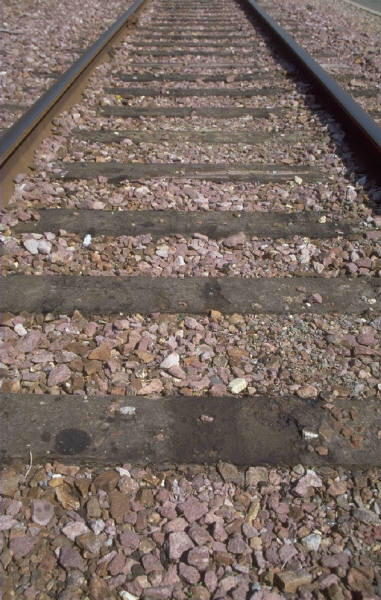
But when Gilsonite prices went off the rails in the late 1930s, so did the Uintah Railway.
Now, based in part on a desire to cut the number of double-tanker trucks hauling crude oil out of the Uintah Basin, officials at the state and local level will study the current and future transportation needs of the region.
One possibility on the table? A new railroad system.
One double-tanker truck leaves the Uintah Basin every three minutes, according to Cheri McCurdy, executive director of the Uintah Transportation Special Service District.
The district McCurdy heads has $700,000 from the state Community Impact Board — which allocates a portion of the tax money Utah collects on oil and gas production in the state — to commit to the regional transportation study. An additional $200,000 is coming from the Utah Department of Transportation, and Duchesne County and its transportation district are kicking in another $200,000.
Possible transportation modes for meeting the demands identified in the report will be evaluated in a future phase of the study. And while rail is definitely one possibility that will be considered, according to UDOT spokeswoman Mindy Nelson, it's not the only option that will be evaluated. Deseret News
Monday, March 19, 2012
Third Annual Black Wax Workshop Coming to Vernal April 12
Researchers, government, and industry representatives will attend the third annual Black Wax Workshop at the Uintah Basin Applied Technology College in Vernal. The workshop is a collaborative exchange to explore technical solutions for issues surrounding the transport of highly paraffinic “Black Wax” oil from the Uintah Basin to refineries in the Salt Lake area.
Subscribe to:
Posts (Atom)